
In today’s world, not only are digital scams becoming more common, but they’re also becoming more convincing. According to Pew Research Center around 80% of global internet users were exposed to a digital scam in 2024 alone and almost 20% of that population was affected by the scams. Personally, I’ve seen so many scams through text messages and email by users pretending to be a company like Amazon or your bank. These messages usually claim there has been suspicious activity regarding my account and I need to respond with my account credentials so it can be fixed.

The purpose of this type of scam is to steal personal information such as usernames, passwords, or even credit card details. The message usually creates a false sense of urgency in order to get you to react in a way you normally wouldn’t due to the pressure of time. Once the user clicks the link on one of these scams they’re usually taken to a fake website that looks very similar to the real one. These scams usually work by taking advantage of people’s trust and fear, and the most convincing ones have emails that look very professional.
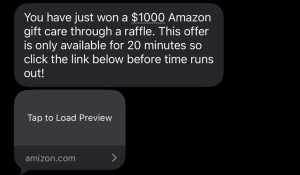
However, there are several ways to identify the scam risk of these messages. First, the email address or phone number often looks unusual or doesn’t match the official company’s. Second, the message may contain spelling or grammar mistakes. Third, legitimate companies don’t ask for sensitive information through links in emails and texts. Finally, hovering over the link can sometimes reveal a suspicious or incorrect website address.

To avoid falling for scams like this, it is important to stay cautious and take a moment to verify the source before clicking any links. Instead of using the link that has been provided to you, you can also go to the official website and sort out your business there. Being aware of these warning signs can help protect your personal information and prevent becoming a victim to digital scams.
Source: Pew Research Center
Wow this website is genuinely so informative! I should be safe from all scams now!
Glad I could help! Let me know if you have any further questions or if you have an idea of what I should blog about next.
This is good advice, I can’t believe how many people are affected by scams each year, it’s extremely sad.
It is very sad. The main way to avoid being scammed is to use common sense. There’s only so much we can do to protect ourselves but you can never be too careful.
Dis coo, i Likey and it helps me stay away from wacky doo hacker people
That’s great to hear Grayson! Let me know what I should blog about next.
Damn bro, this is very helpful. I redeemed a google gift card the other day and an Indian man started yelling at me? What kind of a scam is this?
Very informative and a good reminder to be educated on how scams affect the technology we have put in our daily lives.
Thank you, no matter how protected we think we are, there is always a chance that we can be exposed to digital malware so it is best to be cautious!
I’m very sorry to hear that, if he was pressuring you to move quickly by yelling at you this is a common example of phishing. I hope you didn’t fall for it.
I need to share this with everyone, especially my grandparents! They fell for one of these scams about a year ago. Still so sad they had to sell their show dog Trevor to be able to pay off their debts. Any ho that was a treat to read!
Glad you found this article to be helpful! Sadly, it’s true that older generations are more prone to scams because they usually aren’t as tech savvy as kids who grew up with these programs. Share this blog to help them out!